

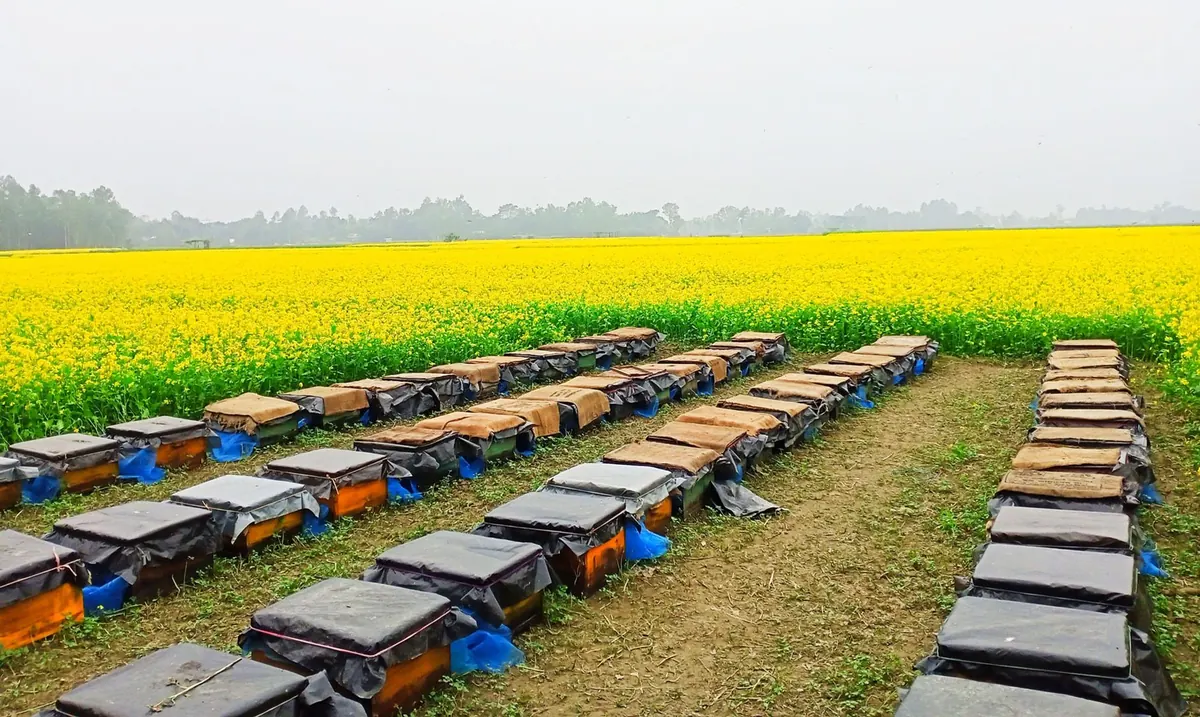
A single hive takes up about as much room as a wheelie bin, which is why so many people with modest gardens talk themselves into one. The bees, unfortunately, are not the difficult part. The difficult part is the flight path over your neighbour's patio, the clause in your lease you have never read, and the realisation in September that you have spent a few hundred pounds and still have no honey. None of that means you shouldn't keep bees. It means you should do the checks first.
Start with the space, not the hive
Ignore the catalogue for a week and walk your garden instead. You are looking for a spot that satisfies three things at once: good light, decent shelter, and a flight path that doesn't cross anyone's head.
Bees leave the entrance, rise, and head off. If the hive faces a path, a door, a washing line or a seating area, they will fly through it for most of the year. Point the entrance at a fence or hedge at least two metres high and they will climb over it and be gone. That single detail prevents more neighbour complaints than anything else.
Morning sun gets the colony moving early, which helps in a cool British spring. Some shade in the afternoon is welcome during a hot spell. Windbreaks matter too — a hive rocking in a gale upsets the bees and makes inspections miserable — but don't tuck it into a damp, airless corner. Good airflow keeps a hive drier.
Then think about you. You need roughly a metre of clear standing room beside or behind the hive, ideally two, and a flat surface. You also need a route to carry boxes to and from the house. A full super of honey is heavier than most beginners expect, and you will be lifting it.
Placement tips that keep the peace
- Face the entrance away from neighbours' gardens, patios and washing lines wherever the site allows.
- Use a barrier — hedge, fence, trellis with climbers — to lift the bees' flight path above head height.
- Provide water close by. A shallow tray with pebbles and a little water saves your bees from queueing at someone else's pond.
- Leave room for a second hive. Two colonies are genuinely easier to manage than one, because you can compare them and borrow from one to help the other. Plan for it now.
- Keep the entrance clear of long grass and clutter, and check it after storms.
Talk to the neighbours before you order anything
Most objections to bees are about fear rather than experience. A conversation over the fence in February is worth more than an apology in July. Explain what you're planning, where the hive will go and roughly what the bees will do. Give them your mobile number.
Be honest about swarming. It is a normal part of colony life, and a swarm settling in a neighbour's shed is the scenario that causes real trouble. Learn swarm control before your first spring, keep a spare box ready, and tell your neighbours what a swarm looks like so they ring you rather than the council. If they seem genuinely opposed, consider an out-apiary instead: many beekeeping associations know of farms, orchards and allotment sites that welcome a hive.
The rules, and where to check them
There is no national licence to keep bees in the UK, but that doesn't mean there are no rules. Several layers apply at once, and they differ across England, Scotland, Wales and Northern Ireland.
- Your tenancy, lease or deeds. Some agreements prohibit hives or "livestock". Read yours before buying.
- Allotments. Many sites allow bees, but usually only with the committee's approval and on a designated plot.
- Your council. Councils don't generally license hives, but environmental health can act if a colony becomes a nuisance, and council tenancy conditions may say no.
- Planning and conservation. A hive is rarely a planning matter, but listed buildings and conservation areas have their own considerations.
- Disease reporting. Suspected notifiable brood disease must be reported. Register your apiary on BeeBase, the National Bee Unit's free service, so you receive alerts.
- Insurance. Household policies often exclude bees. Many local association memberships include public liability cover — check exactly what it covers before you rely on it.
If your situation is complicated — a lease, a shared freehold, a listed building — take proper advice rather than assuming.
What the first year actually costs
Beekeeping is not expensive by hobby standards, but the first year is the costly one. Budget for the following and add a contingency, because prices move and something always needs replacing.
- A hive. A flat-pack National or a poly hive, plus frames and foundation. Assembled and painted costs more than flat-pack; poly is light and weatherproof.
- A nucleus colony. Five frames of bees, brood and a laying queen. Buy locally from a beekeeper you can talk to, and ask about temperament and health. A nuc often costs more than the hive it arrives in.
- Protective clothing. Suit, gloves and boots. Do not economise on the veil.
- Tools. Hive tool, smoker, feeder, queen excluder, spare frames — you need spares, especially in swarm season.
- Extracting kit. Borrow a honey extractor from your association for the first few years rather than buying one.
- Ongoing costs. Sugar for feed, varroa treatment, jars and labels if you sell, replacement frames, and the possibility of replacing a colony after a bad winter.
- Association membership. Usually modest, and it buys you a mentor, insurance and loan of equipment.
One more consideration: giving honey to friends is straightforward, but selling it brings food hygiene and labelling duties. If you plan to sell, look into what's required first.
What the first season really looks like
You will almost certainly not harvest much honey in year one, and that is normal. The colony's job in its first season is to draw comb, build numbers and get strong enough to survive winter. Your job is to feed them when they need it, monitor varroa, keep records and learn to read the brood nest.
Expect the pace to change fast in May and June, when a colony can go from calm to crowded in a fortnight. Expect a quiet, anxious period in late winter, when you can do nothing but watch the entrance on mild days. Most new beekeepers lose their first colony; treat it as tuition rather than failure.
Three things to do before you order a hive
- Spend a full day with a beekeeper. Not a taster session in a suit — a real inspection day, including the lifting and the smoke and the bees in your hair.
- Join your local association and get on a swarm list or a beginners' course. The practical help you'll get in year one is worth more than any book.
- Complete the checks: site the hive on paper, speak to the neighbours, confirm your lease or tenancy allows it, and sort out insurance.
Then order the hive, and put your name down for a nucleus colony for the following spring. Bees reward patience more than enthusiasm, and a beekeeper who has done the groundwork in winter has a far better first summer than one who bought a hive on a whim in June.
Photo: Viewers / Pexels